The Story of Silas and the Broken Car
Silas was a hardworking farmer who tended to a modest plot of land in a quiet valley. He wasn’t a rich man; his hands were calloused from decades of labor, and his bank account was often pushed to the limit by unpredictable weather and fluctuating crop prices. Yet, Silas lived by a simple rule: If you have the power to help, you have the duty to help.
One stormy autumn evening, as torrential rain turned the dirt roads into thick, treacherous mud, Silas heard a strange sputtering sound outside. Peering through his window, he saw a sleek luxury sedan stranded at the edge of his property, its hazard lights blinking weakly in the dark.
Silas grabbed his heavy yellow raincoat, a flashlight, and his toolbox, and headed out into the downpour.
Inside the car was a young man in an expensive suit, looking completely stressed and out of his depth. He had a flat tire, a smoking engine, and absolutely no cell phone service in the valley.
“Don’t worry, son,” Silas said, shouting over the thunder. “Let’s get your car hooked up to my tractor. We’ll pull it into the barn and see what we can do.”
Silas spent the next three hours soaked to the bone, fixing the stranger’s engine and changing the tire. Afterward, he invited the shivering man inside, and his wife cooked him a hot, comforting meal. When the storm finally cleared, the young man pulled out a thick wad of cash to pay the farmer.
Silas firmly pushed the money away. “No, sir. I don’t take money for doing what’s right. Just pass the kindness along to someone else down the road.”
The stranger looked deeply moved. He shook Silas’s hand firmly. “My name is Thomas. I won’t forget this, Silas.”
Years Later: The Threat
Ten years passed. The world changed, and a massive real estate conglomerate began aggressively buying up the land in the valley to build a sprawling industrial complex. One by one, Silas’s neighbors sold their farms.
Silas refused. The land had been in his family for generations.
Because of his defiance, the conglomerate began squeezing him out. They bought the water rights up-river, cut off his traditional access roads, and buried him in aggressive legal lawsuits. Silas spent every penny of his savings trying to fight them in court, but he was drowning in debt.
Finally, a heavy, official envelope arrived in his mailbox. It was a final eviction notice. The court had ruled against him. He had 30 days to pack up his life and abandon his ancestral home.
Silas sat at his kitchen table, burying his face in his calloused hands, and wept. He had lost everything.
The Unexpected Reward
The next morning, a high-end luxury vehicle pulled up the dirt driveway—reminiscent of the car from that stormy night a decade ago.
A man in a tailored suit stepped out. It was Thomas. He was older now, carrying himself with immense authority, but he still had the same sharp, grateful eyes.
Silas walked out to meet him, holding the eviction notice. “Thomas? What are you doing here? If you’re here to see the farm, I’m afraid I’m losing it.”
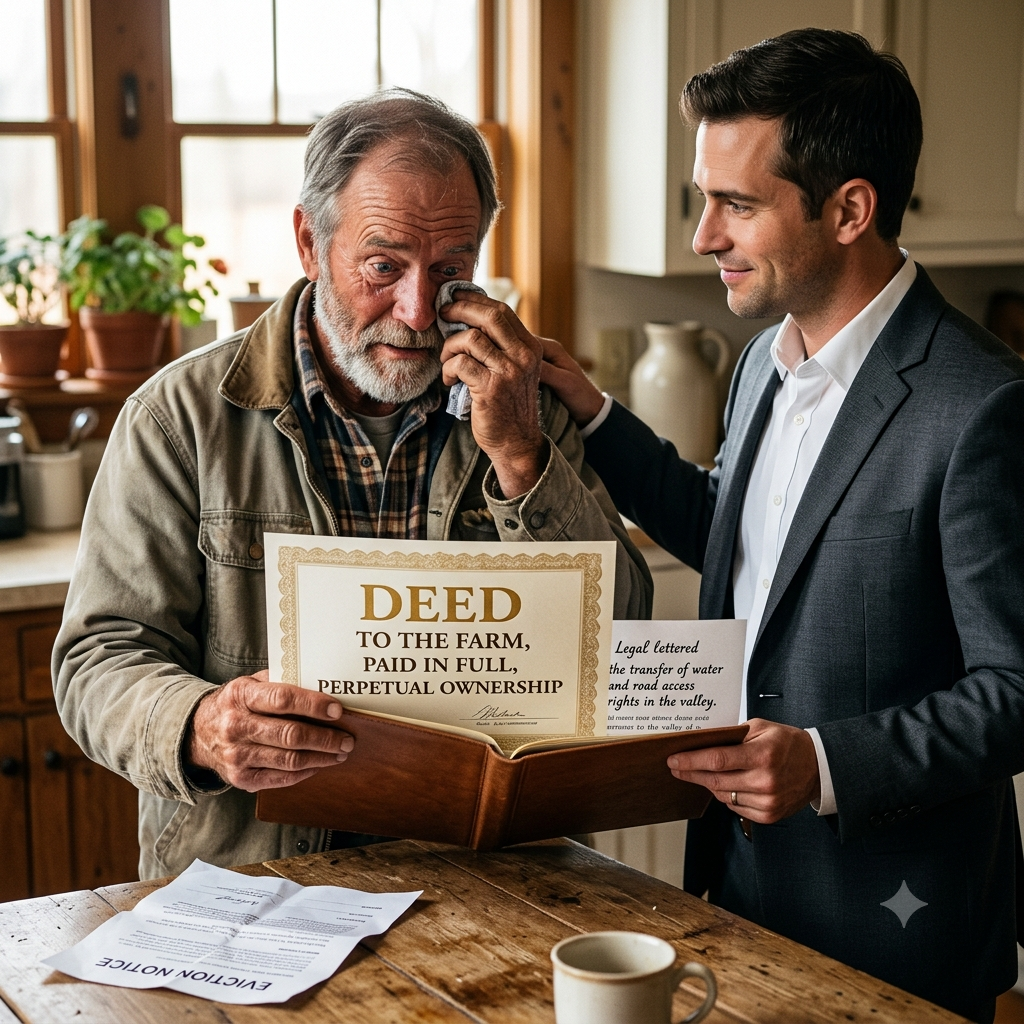
Thomas smiled warmly and handed Silas a heavy, embossed leather folder. “I know, Silas. That’s exactly why I’m here.”
When Silas opened the folder, his jaw dropped. Inside was the deed to his farm, stamped with a gold seal that read: PAID IN FULL. PERPETUAL OWNERSHIP. Accompanying it was a legally binding document securing the valley’s water and road rights for Silas’s property forever.
“I told you I wouldn’t forget,” Thomas said quietly. “A few years after you helped me, I became the CEO of that real estate conglomerate. When your case finally crossed my desk this week, I recognized your name instantly.”
Thomas put a hand on the old farmer’s shoulder.
“You refused my money ten years ago because you said kindness shouldn’t have a price tag. Well, my company just bought out all the debts against your farm, dropped the lawsuits, and put the land permanently in your name. You saved me from a dangerous storm once. It’s my turn to save you from yours.”